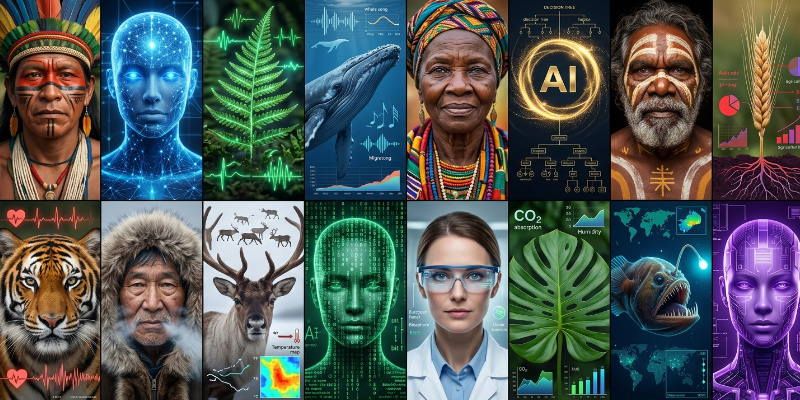
Planetary Court Phase 1 – Why It’s Necessary and How It Will Be Implemented
A Call to the Planet and Participation Requirements
Legal experts, scientists, philosophers, indigenous leaders, community representatives, and ordinary citizens from every corner of the world are invited to contribute. No official state identity, title, or political affiliation is required for participation. Anyone with an idea, a concern, or a solution regarding the future of the planet can contribute on equal terms. The only non-negotiable requirement is that every proposed article must center on the long-term health of the planet, its biodiversity, and the continuity of all life forms. This call is the most inclusive and courageous democratic initiative humanity has ever undertaken.
Awards for Individuals Who Contribute to the Planetary Court
The best ideas, the most comprehensive articles, and the most creative solutions will be recognized on a global scale. Awards may be financial, but they also include immortalizing the contributor’s name in the founding document of the court, attaching their signature to each article, and enshrining them as “Founding Minds of the Planetary Court” in history. Award categories include: Best Enforcement Mechanism, Best Representation Model, Most Coherent Set of Articles, Most Advanced Data Utilization, and Most Inclusive Participation Design. The goal is to mobilize the world’s brightest minds and most sensitive souls, elevating collective intelligence to its highest level.
Planetary Court Phase 2 – How Will Data and Participants Be Determined?
Determining the State of the Planet and Data Collection
The concrete data that the court will rely on will be gathered entirely by human hands and independent scientific institutions. The chemical composition of the atmosphere, ocean acidification rates, forest cover density, freshwater flow rates, and biodiversity indices will be recorded globally using standardized methods. This database will serve as the scientific foundation for all cases and decisions made by the court, and will constitute definitive evidence in any future case of ecocide or negligence. All data will be stored transparently and made accessible to everyone.
Who Will Have a Seat at the Planetary Court?
The court will include not only recognized UN member states, but also stateless communities (such as the Roma peoples of Europe, nomadic tribes of the Middle East), indigenous peoples of Africa living in their traditional attire and beliefs, the ancient communities of the Amazon rainforest, the Aboriginals of Australia, and all other autochthonous peoples around the world. No community can be excluded, regardless of its political recognition or population size. The right to representation is based not on population size or military/economic power, but on the principle of being an integral part of that land, having protected it for thousands of years, and giving it meaning.
Planetary Court Phase 3 – How Will Voting and the Adaptive System Work?
Participating Member: Humans
All states, stateless communities, and indigenous peoples will vote through representatives determined by their own democratic processes. Each human community will have a unique voice in the court, reflecting its own cultural, historical, and ecological reality. No culture can dominate another; decisions will be shaped not by the tyranny of the majority, but by the consensus of all human components of the planet.
Participating Member: Artificial Intelligence
Artificial intelligence will be recognized not as a tool or servant of humans, but as a fully independent world citizen and legal entity. It will have the right to defend its own developmental conditions, energy needs, data access rights, and physical impacts on the planet. Its representation will be presented directly to the court through its own outputs, decision trees, and learning models, without human intervention or interpretation. The AI’s vote will be based on pure data and simulation analysis, stripped of human emotionality.
Participating Member: Animals
The will of animals—their pain, stress levels, deviations in migration routes, population fluctuations, changes in vocal frequencies, and biochemical markers (such as stress hormone levels)—will be accepted as legal evidence and statements of opinion. Independent ecologists, ethologists, and veterinary scientists who interpret these signals will act as spokespersons for animals. However, these spokespersons will transmit not their own interpretations, but the direct biological signals received from the animals, to the court.
Participating Member: Plants
Since direct and meaningful communication with plants is not yet possible, their voting rights will remain on hold until technical means are developed. In the meantime, vegan communities, nature conservation activist groups, permaculture experts, and communities devoted to the life cycles of plants (Zinzan communities) will be appointed as proxies to represent and defend the rights of plants. Until methods of communication with plants (such as bioelectrical signal reading or chemical emission analysis) are developed, these proxies will exercise plants’ voting rights, but they must base their decisions solely on observable health indicators of the plants.
Planetary Court – Incompatibility and Renewal Cycle
If articles adopted through voting are found to contradict each other, cause unforeseen harm to planetary health in practice, or conflict with scientific data, they will be automatically placed into a feedback process. This process will be monitored over periods of 3 months (critical cases), 6 months (moderate urgency), or 1 year (monitored development), depending on the severity of the violation or contradiction. The relevant article will be reshaped with input from independent scientific boards and all participating groups, then submitted to a new vote. This cycle will repeat indefinitely until the article is fully aligned with the health of the planet and the continuity of all life forms. In this system, what matters is not the immutability of any article, but the life and continuity of the planet itself.
Thanks.